Comparative Genomics Reveals Genomic Adaptations in Subcontinent Endemic Flora
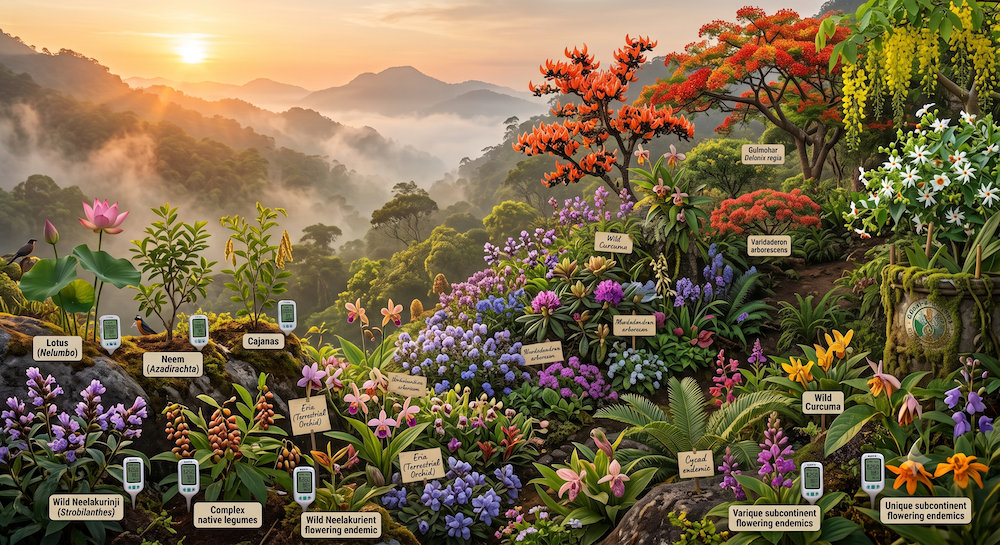
The Indian subcontinent is home to some of the world's most ecologically rich biodiversity hotspots, from the high-altitude niches of the Himalayas to the tropical montane rainforests of the Western Ghats. For millions of years, native plant lineages across these regions have evolved under intense selective pressures—ranging from extreme seasonal monsoons and prolonged drought cycles to high pathogen exposure and unique edaphic conditions.
Today, high-throughput sequencing combined with comparative genomics allows us to read these evolutionary blueprints directly. At Bharat Genome Database (BGDB.org), we are cataloging, analyzing, and sharing these genomic adaptations to accelerate biodiversity conservation, agricultural resilience, and functional bioprospecting.
1. Uncovering Evolutionary Signatures Through Comparative Synteny
When genomes of endemic flora are compared against cosmopolitan relatives, distinct patterns of genomic rearrangement emerge. Large-scale whole-genome duplication (WGD) events and localized tandem duplications often cluster around gene families responsible for:
- Secondary Metabolite Biosynthesis: Expansion of terpene synthases, cytochrome P450s, and polyketide synthases that power specialized plant defenses and therapeutic compounds (such as in Santalum album, Curcuma longa, and Ocimum tenuiflorum).
- Stress Response & Osmoregulation: Enriched copies of late embryogenesis abundant (LEA) proteins, heat shock transcription factors (HSFs), and antioxidant pathways that allow endemic species to survive erratic drought-flood transitions.
- Specialized Root-Microbe Interactions: Unique receptor-like kinases (RLKs) that modulate symbiotic associations with native soil mycorrhizae and diazotrophic endophytes.
By aligning chromosome-scale assemblies, researchers can pinpoint exactly when and where these gene families expanded, identifying the genomic innovations that allowed native flora to thrive in specialized microclimates.
2. The BGDB.org Advantage: Open Data & Integrated Analysis
While genomic data generation is accelerating, raw sequence reads stored in fragmented repositories remain difficult for many researchers to inspect interactively. BGDB.org addresses this bottleneck by functioning as a centralized, open-access FAIR (Findable, Accessible, Interoperable, Reusable) genomic data platform:
- Interactive Genome Browsing (JBrowse 2 & IGV): Seamlessly inspect gene annotations, exon-intron architectures, transposable element landscapes, and structural variants across high-resolution plant assemblies directly from your web browser.
- High-Performance Sequence Alignment: Execute targeted BLAST queries against curated local nucleotide and protein databases for subcontinent flora.
- Automated Genome Annotation with VEDA: Our automated pipeline, VEDA (Versatile Engine for Data Annotation), standardizes structural and functional gene prediction for non-model eukaryotic species, resolving complex repeat-rich plant architectures.
3. Preserving Living Heritage: The BioHeritage Initiative
Genomic conservation is no longer just an academic exercise; it is an urgent requirement for biodiversity preservation. Climate shifts and habitat fragmentation threaten rare and localized flora with extinction before their biochemical and ecological potential is understood.
Under the BioHeritage Program powered by the Sivasakthi Science Foundation, BGDB is driving the Adopt-a-Genome Campaign. This initiative bridges field botanists, computational biologists, academic institutions, and citizen scientists to sequence, annotate, and digitally safeguard the complete genetic blueprints of ecologically vital and endangered native species.
Explore the Resources on BGDB.org
- Browse Assemblies: Explore curated resources for native species including Nelumbo nucifera (Lotus), Cocos nucifera (Coconut), Azadirachta indica (Neem), Santalum album (Sandalwood), and Musa cultivars.
- Deploy Analytics: Access embedded tools including BLAST, JBrowse 2, and the BGDB Site Deployer.
- Collaborate: Connect with the research team at research@bgdb.org to contribute data, adopt a target genome, or integrate comparative workflows into your ongoing studies!